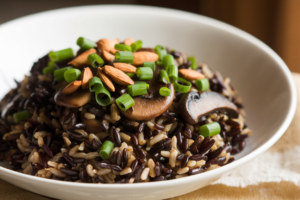
You want a side dish that doesn’t play sidekick. This wild rice pilaf with mushrooms shows up like a main character—nutty, savory, and loaded with umami. It’s the kind of recipe that makes weeknights feel like you’ve got a private chef, minus the awkward small talk.
Crisped edges, glossy mushrooms, toasted aromatics—yeah, it’s that good. Make it once for dinner and suddenly you’re the person everyone asks, “Hey, what’s that recipe again?”
What Makes This Recipe So Good
- Big, layered flavor: Wild rice brings a deep, nutty chew; mushrooms deliver savory oomph; herbs and aromatics do the quiet heavy lifting.
- Restaurant-level texture: The rice stays fluffy with a pleasant bite, and the mushrooms caramelize instead of steaming. That contrast?
Addictive.
- Flexible and forgiving: Works with mixed wild rice blends, any mushrooms you have, and stock or broth you prefer. It’s a choose-your-own-adventure that still wins.
- Meal-prep rockstar: Keeps beautifully, reheats like a dream, and upgrades leftovers with one pat of butter or a squeeze of lemon.
- Elevates anything: Roast chicken, seared salmon, hearty salads—this pilaf makes them all look better. It’s the wingman of your dinner table.
What You’ll Need (Ingredients)
- 1 cup wild rice (or a wild rice blend)
- 2 1/4 cups low-sodium vegetable or chicken stock (plus a splash more if needed)
- 10–12 oz mushrooms (cremini, shiitake, oyster, or mixed), sliced
- 1 small yellow onion, finely diced
- 2 cloves garlic, minced
- 2 tbsp unsalted butter (or olive oil for dairy-free)
- 1 tbsp olive oil (for sautéing mushrooms)
- 1 bay leaf
- 1 tsp fresh thyme leaves (or 1/2 tsp dried)
- 1/2 tsp dried sage (or 1 tsp fresh, minced)
- 1/4 tsp crushed red pepper flakes (optional)
- 1/3 cup chopped parsley
- 1/3 cup toasted slivered almonds or pecans (optional, but excellent)
- Zest of 1/2 lemon and 1–2 tsp lemon juice
- Kosher salt and freshly ground black pepper
Instructions
- Rinse the rice: Place the wild rice in a fine-mesh strainer and rinse under cold water for 20–30 seconds.
This removes dust and helps the grains cook evenly.
- Sweat the aromatics: In a medium saucepan, melt 1 tbsp butter over medium heat. Add the onion and a pinch of salt; cook 4–5 minutes until translucent. Stir in garlic for 30 seconds.
- Toast and simmer: Add the rinsed wild rice, bay leaf, thyme, and sage.
Stir for 1 minute to coat. Pour in the stock, bring to a boil, then reduce to a steady simmer. Cover and cook 35–45 minutes, until the rice is tender and some grains split open.
If liquid evaporates too fast, add a splash of warm water.
- Sauté the mushrooms: While the rice cooks, heat 1 tbsp olive oil and 1 tbsp butter in a large skillet over medium-high. Add mushrooms in an even layer with a pinch of salt. Don’t stir for 2–3 minutes to get color, then cook another 3–4 minutes, stirring occasionally, until browned and glossy.
Season with pepper and red pepper flakes (if using).
- Combine and finish: Fluff the cooked rice with a fork. Remove the bay leaf. Fold in the sautéed mushrooms, parsley, lemon zest, and lemon juice.
Taste and adjust salt and pepper.
- Add crunch (optional but elite): Stir in toasted nuts just before serving for texture contrast.
- Serve warm: Drizzle a tiny bit of olive oil or dot with the remaining 1 tbsp butter if you want a sheen. You earned it.
Storage Instructions
- Fridge: Store in an airtight container for up to 4 days. Cool fully before sealing to avoid condensation and mushiness.
- Freezer: Freeze up to 2 months.
Portion into flat bags for quick thawing. Reheat with a splash of stock or water.
- Reheat: Skillet over medium with a bit of butter or oil until warmed through, 4–6 minutes. Or microwave in 45–60 second bursts, stirring and adding a teaspoon of water as needed.
Health Benefits
- Whole-grain power: Wild rice is rich in fiber, B vitamins, and minerals like magnesium and phosphorus.
It’s naturally gluten-free and supports steady energy.
- Umami with perks: Mushrooms offer antioxidants like ergothioneine and beta-glucans that support immune function. They bring flavor without heavy calories.
- Better fats, better balance: Olive oil and nuts add heart-healthy monounsaturated fats and vitamin E. Satisfying without being heavy—yes, that’s legal.
- Sodium-smart: Using low-sodium stock lets you control the salt, which your future self (and blood pressure) will appreciate.
What Not to Do
- Don’t overcrowd the mushrooms: They’ll steam instead of brown.
Use a wide skillet and cook in batches if needed.
- Don’t skip rinsing the rice: It helps with clean flavor and consistent texture.
- Don’t boil aggressively: A raging boil can burst the grains and turn things uneven. Gentle simmer = best texture.
- Don’t forget acidity: The lemon at the end wakes the whole dish up. Without it, your pilaf is missing its exclamation point.
- Don’t be shy with salt and pepper: Under-seasoned pilaf is a tragedy.
Taste as you go, especially after adding mushrooms.
Alternatives
- Grain swaps: Try farro or barley (adjust cook times). For faster cooks, use brown basmati and reduce liquid slightly.
- Mushroom mix-ups: Cremini + shiitake for depth, oyster for tenderness, or portobello for a meatier bite. Rehydrate dried porcini and add the soaking liquid (strain first) for a flavor bomb.
- Herb variations: Use rosemary instead of sage for a piney profile, or finish with dill and chives for a brighter vibe.
- Dairy-free/vegan: Swap butter for olive oil and use vegetable stock.
Finish with a drizzle of good extra-virgin olive oil.
- Protein add-ins: Fold in shredded rotisserie chicken, seared tofu cubes, or chickpeas to make it a full meal. FYI, crispy pancetta also slaps.
- Extra veg: Add finely diced celery and carrot with the onion for a classic mirepoix base, or stir in baby spinach at the end until just wilted.
FAQ
Can I use a wild rice blend instead of pure wild rice?
Yes. Wild rice blends (often mixed with brown or red rice) cook a bit faster—check around 25–30 minutes.
Adjust liquid slightly if the blend absorbs less; you want tender, not soggy.
Why did my mushrooms turn watery?
They were crowded or the heat was too low. Give them breathing room, use a hot pan, and salt lightly at the start, then adjust at the end. Moisture evaporates, browning happens, everyone wins.
Do I need to soak wild rice?
Not required.
Soaking can shorten cook time by a few minutes, but rinsing is enough. If you do soak, reduce total simmer time by 5–8 minutes and monitor doneness.
How do I know the rice is done?
Grains should be tender with a pleasant chew, and some will have split. If the center is still hard, add a few tablespoons of warm stock and continue simmering, covered, for 3–5 minutes.
Can I make this in an Instant Pot?
Absolutely.
Combine rinsed wild rice, aromatics, spices, and 2 cups stock. High pressure for 28 minutes; natural release 10 minutes. Sauté mushrooms separately and fold in after.
What if I don’t have fresh herbs?
Use dried thyme and sage as listed, or substitute Italian seasoning in a pinch.
Start small—dried herbs are potent—and adjust to taste.
How can I make it more luxurious for guests?
Finish with a knob of butter, a splash of dry white wine reduced with the mushrooms, chopped chives, and shaved Parmesan. It reads “fine dining” without the dress code.
In Conclusion
Wild Rice Pilaf with Mushrooms is that rare unicorn: simple enough for Wednesday, impressive enough for Saturday. It’s nutty, savory, bright, and endlessly adaptable—AKA the side you’ll “accidentally” turn into dinner.
Keep stock, rice, and mushrooms on standby, and you’re always 35 minutes away from something stylish. Your table just got an upgrade, no reservation required.
Printable Recipe Card
Want just the essential recipe details without scrolling through the article? Get our printable recipe card with just the ingredients and instructions.
Printable Recipe Card
Want just the essential recipe details without scrolling through the article? Get our printable recipe card with just the ingredients and instructions.