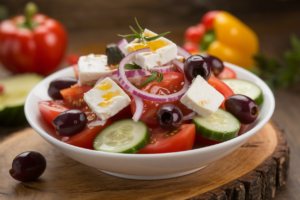
Authentic Greek Salad – Fresh Mediterranean Flavor
Skip the overpriced “artisan” salads that taste like regret and wilted lettuce. This is the blunt, bold original: chunky tomatoes, crisp cucumbers, briny olives, sharp red onion, and a thick slab of feta—no fluff, no fillers. It’s fast, it’s bright, and it slaps with flavor because the ingredients actually matter.
Think Mediterranean sunshine in a bowl with zero culinary gymnastics. You’ll make it once and wonder why you ever pretended croutons were exciting.
What Makes This Recipe Awesome
- Peak flavor with minimal effort: No cooking, no special equipment—just chopping and tasting. That’s it.
- Real-deal Horiatiki style: No lettuce, no balsamic glaze, and no random add-ins.
Authentic, village-style simplicity.
- Amazing texture contrast: Juicy tomatoes, crisp cukes, creamy feta, and olives with bite. Your mouth gets a workout—in a good way.
- Clean, bold dressing: Just olive oil, lemon or vinegar, and oregano. When your olive oil is good, you don’t need a chemistry set.
- Scales like a champ: Solo lunch?
Family table? Backyard feast? Double or triple without thinking.
What Goes Into This Recipe – Ingredients
- Tomatoes: 3–4 ripe, firm tomatoes (Roma, vine, or heirloom).
Avoid mealy or refrigerated tomatoes.
- Cucumber: 1 large English cucumber or 4–5 small Persian cucumbers, sliced into half-moons.
- Red onion: 1 small, thinly sliced. Soak in cold water for 10 minutes if you want a milder bite.
- Kalamata olives: 3/4 cup, pitted. Whole or halved, your call.
- Green bell pepper (optional but classic): 1 small, thinly sliced.
- Feta cheese: 6–8 oz, in a block, not crumbled.
Sheep’s milk feta if you can find it.
- Extra-virgin olive oil: 1/4 cup, high quality—this carries the salad.
- Red wine vinegar or fresh lemon juice: 1–2 tablespoons to taste.
- Dried oregano: 1–2 teaspoons. Greek oregano preferred.
- Sea salt and freshly cracked black pepper: To taste.
- Capers (optional): 1 tablespoon, drained.
How to Make It – Instructions
- Prep the vegetables: Cut tomatoes into wedges, cucumbers into half-moons, red onion into thin slices, and bell pepper into rings or strips.
- Build the base: Add tomatoes, cucumbers, onion, bell pepper, and olives to a large shallow bowl or platter.
- Season first: Sprinkle with a pinch of sea salt and black pepper. This draws out tomato juices—free dressing, basically.
- Dress it simply: Drizzle olive oil evenly over the vegetables, then add red wine vinegar or lemon juice.
Start modestly—you can always add more.
- Oregano moment: Dust the top with dried oregano. Don’t be shy; this is the soul of the salad.
- Add feta: Place a big slab (or two) of feta on top. Drizzle with a bit more olive oil and a final sprinkle of oregano.
- Taste and adjust: Need more acid?
Add a splash of vinegar or lemon. Want more brine? Throw in capers.
Too salty? Add more cucumber and tomato.
- Optional rest: Let it sit 5–10 minutes so flavors mingle. Or eat immediately if patience isn’t your thing.
Preservation Guide
- Short-term storage: Refrigerate leftovers in an airtight container for up to 24 hours.
The flavors meld; tomatoes soften a bit.
- Keep feta separate: If you plan for leftovers, add feta to individual portions so it stays firm and creamy.
- No sogginess, please: If making ahead (2–4 hours), store chopped veggies undressed. Mix with oil, vinegar, and feta right before serving.
- Revive leftovers: Add a few fresh cucumber slices and a splash of lemon or vinegar. It wakes the salad up—like coffee, but edible.
What’s Great About This
- Nutritious without trying: Fiber, antioxidants, healthy fats, and protein from feta—no lecture needed.
- Budget-friendly: A handful of quality ingredients beats a long grocery list every time.
- Satisfying and light: You’ll feel full but not sluggish.
Yes, that’s allowed.
- Season-proof: In summer, it shines. In winter, it still works with greenhouse cukes and decent imported tomatoes.
- Flexible pairing: Serve with grilled chicken, lamb chops, pita and tzatziki, or just crusty bread to mop up juices (mandatory, IMO).
Common Mistakes to Avoid
- Using crumbled feta: It dries out and gets chalky. A block keeps its creamy texture and looks iconic.
- Skipping the salt on tomatoes: Salt unlocks their juices, which become part of the dressing.
Don’t miss out.
- Watery cucumbers: If using standard cucumbers, peel and seed to avoid excess water. Persian/English cukes are best.
- Overdressing: You’re not making soup. Drizzle, toss, taste, adjust.
- Sad olive oil: Bitter, old oil will ruin the salad.
Use fresh, fruity extra-virgin olive oil.
- Refrigerating tomatoes: It kills their flavor. Store at room temp and use ripe ones.
Different Ways to Make This
- Herb-forward: Add fresh oregano or mint leaves for a garden twist.
- Capers + anchovy: For umami-lovers, add chopped anchovies and capers. Big flavor, small effort.
- Roasted pepper swap: Replace raw green pepper with strips of roasted red pepper for sweetness.
- Hearty version: Add a handful of chickpeas or grilled halloumi.
Not traditional, but your dinner, your rules.
- Citrus flair: Swap red wine vinegar with Meyer lemon juice for a softer acidity.
- Spice kick: Finish with a pinch of Aleppo pepper or chili flakes for gentle heat.
FAQ
Can I use cherry tomatoes?
Yes, cherry or grape tomatoes work well and tend to be sweet and consistent year-round. Halve them so the juices can mingle with the dressing.
Is there a substitute for Kalamata olives?
You can use other briny olives like Halkidiki or Gaeta. Just avoid canned black “pizza” olives—they’re too mild and metallic for this salad.
What type of feta is best?
Sheep’s milk feta from Greece is ideal—creamy, tangy, and not overly salty.
If unavailable, a good-quality block feta in brine is your next best move.
Can I make this vegan?
Absolutely. Omit the feta and add a sprinkle of capers and toasted pine nuts for richness. You’ll miss the creaminess a bit, but the flavors still bang.
Is lettuce ever used in Greek salad?
Not in traditional Horiatiki.
If you want greens, serve this salad over a bed of crisp romaine as a separate vibe—but it won’t be classic.
What’s the best olive oil for this?
A fresh, fruity extra-virgin olive oil with low bitterness. Greek EVOO is perfect here, FYI. If it smells bright and peppery, you’re golden.
How do I mellow the onion flavor?
Soak the sliced onion in ice water with a splash of vinegar for 10 minutes, then drain well.
You’ll keep the crunch and lose the harshness.
Can I meal prep this for the week?
Sort of. Prep the veggies and store them separately. Dress and add feta right before eating to avoid sogginess and sadness.
Final Thoughts
Greek Salad (Horiatiki) is what happens when you stop overcomplicating food and let ingredients flex.
It’s fast, fresh, and wildly satisfying, whether you’re feeding guests or just need a reliable weeknight win. Keep good olive oil on hand, treat your tomatoes right, and respect the feta. Do that, and this salad will carry your summer—and honestly, your Tuesdays too.
Printable Recipe Card
Want just the essential recipe details without scrolling through the article? Get our printable recipe card with just the ingredients and instructions.
Printable Recipe Card
Want just the essential recipe details without scrolling through the article? Get our printable recipe card with just the ingredients and instructions.