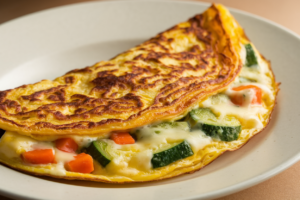
You don’t need a chef’s jacket or a $200 skillet to crush breakfast. You just need eggs, heat, and a little bit of strategy. The humble omelet is the ultimate test of speed, control, and flavor—think of it as culinary jiu-jitsu.
Done right, it’s fluffy, custardy, and packed with whatever your fridge has left. Done wrong, it’s rubbery chaos. Let’s stack the odds in your favor.
What Makes This Special
Most omelet recipes try too hard.
This one focuses on technique over gimmicks, so you’ll get a soft, tender center with a lightly set exterior—no browned, leathery eggs. The secret is low-to-medium heat, constant gentle movement, and finishing off heat to avoid overcooking. It’s fast, flexible, and ridiculously reliable.
Also, we’re not pretending you have truffles.
This omelet works with real-life ingredients—cheese, herbs, last night’s roasted veggies, that half-onion you forgot about. It’s a blueprint, not a lecture.
What You’ll Need (Ingredients)
- 3 large eggs
- 1 tablespoon butter (or 2 teaspoons olive oil)
- 2–3 tablespoons shredded cheese (cheddar, Gruyère, feta, or whatever you love)
- 2–4 tablespoons fillings (pre-cooked veggies, diced ham, smoked salmon, sautéed mushrooms, herbs)
- Pinch of salt
- Pinch of black pepper
- Optional: 1 tablespoon milk or cream for extra softness; a few fresh herbs (chives, parsley, dill)
How to Make It – Instructions
- Prep like a pro: If you’re using veggies or meat, make sure they’re cooked and warm. Cold fillings cool the eggs and mess with the texture.
- Beat the eggs: Crack 3 eggs into a bowl with a pinch of salt and pepper.
Whisk briskly for 20–30 seconds until the whites and yolks are fully combined and slightly frothy. Add milk/cream if using.
- Heat the pan: Place a nonstick 8–10 inch skillet over medium-low to medium heat. Add butter and let it melt until it foams but doesn’t brown.
- Pour and swirl: Add the eggs.
Tilt the pan to spread them evenly. As the edges set, use a spatula to gently pull cooked egg toward the center, tilting the pan so uncooked egg flows to the edges.
- Keep it tender: Continue this gentle push-and-tilt motion for 30–60 seconds. You want soft curds forming with a thin layer of uncooked egg on top.
No aggressive stirring—this isn’t scramble time.
- Smooth the surface: Once mostly set but still slightly glossy on top, stop stirring and let it sit for 10–15 seconds to level out.
- Add fillings: Sprinkle cheese and fillings over one half. Keep it modest—overstuffing = breakage.
- Fold with confidence: Use the spatula to fold the bare half over the filling. If the omelet looks pale and tender, you nailed the heat.
- Finish off heat: Turn off the burner and let the omelet rest in the pan for 10–20 seconds to melt the cheese and finish cooking gently.
- Plate and flex: Slide onto a plate, seam side down.
Add herbs if you’re feeling fancy. Serve immediately.
How to Store
Fresh is best. That said, if you must, wrap the omelet tightly in foil or place in an airtight container and refrigerate for up to 24 hours.
Reheat gently over low heat in a covered skillet with a teaspoon of water to create steam. Microwave works in a pinch: 30–45 seconds at 50% power. Just know the texture won’t be peak-level.
If you’re meal prepping, consider cooking fillings in bulk and making fresh omelets in minutes.
That’s the real hack.
Nutritional Perks
- High-quality protein: Three eggs deliver about 18–21 grams of complete protein to kickstart your day.
- Healthy fats: Eggs and butter provide satiating fats that keep hunger in check. Swap butter for olive oil if you’re going lighter.
- Choline and B vitamins: Great for brain function and energy. Your to-do list just got scared.
- Customizable nutrients: Add spinach for iron, mushrooms for B vitamins, or smoked salmon for omega-3s.
The omelet adapts to your goals—bulking, cutting, or “vibes only.”
Don’t Make These Errors
- Using high heat: This is the #1 omelet killer. High heat browns the eggs and turns them rubbery.
- Overfilling: Keep fillings to 1/4 cup total. Too much weight = torn omelet and sadness.
- Cold fillings: Warm them first to avoid a soggy interior and under-melted cheese.
- Undermixing eggs: Stripes of white and yolk mean uneven texture.
Whisk until uniform and lightly foamy.
- Waiting too long to fold: If the top is fully dry, it’s already overcooked. Fold when it’s still slightly glossy.
- Wrong pan choice: Use nonstick or a well-seasoned pan. This is not the moment to test your stainless-steel ego.
Alternatives
- French-style (omelette baveuse): Extra soft and slightly custardy inside.
Use lower heat and pull sooner.
- American diner-style: Slightly thicker, fully set, with generous fillings. Go medium heat and cook a touch longer.
- Egg-white omelet: Use 4–5 whites, add a teaspoon of olive oil, and don’t overcook—whites firm up fast.
- Herb-forward: Fold in chopped chives, parsley, and tarragon with goat cheese for a fresh, springy vibe.
- Veggie-loaded: Sauté bell peppers, onions, mushrooms, and spinach first. Season them well so the omelet pops.
- Keto-luxe: Bacon, cheddar, and avocado.
Rich? Yes. Delicious?
Also yes.
FAQ
Should I add milk or cream to the eggs?
Optional. A tablespoon of milk or cream softens the texture slightly, but the real tenderness comes from controlling heat. If you’re using high-quality eggs and proper technique, you don’t need dairy at all.
Can I make an omelet without a nonstick pan?
Yes, with a well-seasoned carbon steel or cast iron skillet.
Preheat properly, use enough fat, and don’t rush the release. Stainless steel is possible but unforgiving—IMO, not worth the stress for beginners.
Why does my omelet turn brown?
The heat is too high or you’re cooking too long. Eggs brown quickly and taste sulfurous when overdone.
Keep the heat at medium or below and finish off-heat to preserve that soft, buttery flavor.
When do I add salt?
Salt the eggs before cooking. It helps break down proteins and leads to a more tender result. FYI, waiting until after cooking is a missed opportunity for better texture.
How do I keep the omelet from tearing?
Use less filling, keep the eggs slightly moist when folding, and slide your spatula under the edge with a confident, single motion.
Support the fold with a quick wrist tilt of the pan.
What cheese works best?
Cheddar for sharpness, Gruyère for nutty melt, feta for briny pop, goat cheese for tangy creaminess. Shred or crumble finely so it melts fast without overheating the eggs.
Can I meal prep omelets?
You can prep fillings and beat eggs in advance, then cook fresh in 3 minutes. Pre-cooked omelets are okay for a day, but texture drops off.
Your future self deserves fresh.
The Bottom Line
An elite omelet isn’t about fancy tools—it’s about heat control, gentle movement, and restraint. Keep the pan medium-low, don’t overfill, and fold while the top is still slightly glossy. With this method, you’ll crank out a tender, restaurant-level omelet on a Tuesday morning before your coffee cools.
Fast, flexible, and absurdly satisfying—honestly, why isn’t everyone doing this?
Printable Recipe Card
Want just the essential recipe details without scrolling through the article? Get our printable recipe card with just the ingredients and instructions.
Printable Recipe Card
Want just the essential recipe details without scrolling through the article? Get our printable recipe card with just the ingredients and instructions.