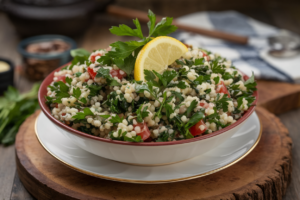
Forget heavy salads drowning in dressing. This one is crisp, punchy, and wildly aromatic. Tabbouleh is the Lebanese power move: more herbs than grain, more zing than oil, and more freshness than your fridge knows what to do with.
It’s the salad people actually fight over at the table. If you think “parsley salad” sounds boring, wait until lemon, mint, and tomatoes show up with a mic. This is how you make plants taste like a celebration.
Why You’ll Love This Recipe
- Max flavor, minimal fuss: It’s chopped herbs, a touch of bulgur, and a bright lemon-olive oil dressing.
That’s it—clean, fresh, and outrageously good.
- Authentic balance: Real Lebanese tabbouleh is herb-forward, not a bulgur bomb. You’ll taste parsley first, then mint, then the juicy tomatoes.
- Meal-prep friendly: The flavors improve after a short rest, and it travels well. Picnic hero, office lunch upgrade, potluck MVP.
- Light but satisfying: It’s refreshing yet satiating thanks to fiber, healthy fats, and complex carbs.
- Versatile pairing: Serve with grilled meats, hummus, labneh, or stuff it in warm pita.
It plays well with everyone.
Shopping List – Ingredients
- Flat-leaf parsley: 3 large bunches (about 6–7 cups leaves, finely chopped)
- Fresh mint: 1 cup leaves, finely chopped
- Fine bulgur (No. 1 grind): 1/4 cup, dry
- Ripe tomatoes: 3 medium, finely diced
- Green onions (scallions): 4–5, finely sliced (white and green parts)
- Fresh lemon juice: 1/3–1/2 cup, to taste
- Extra-virgin olive oil: 1/4 cup
- Kosher salt: 1–1.5 teaspoons, to taste
- Freshly ground black pepper: 1/4 teaspoon
- Optional: 1 small cucumber (seeded and finely diced), pinch of allspice or cinnamon (Lebanese family twist), crisp romaine leaves for scooping
The Method – Instructions
- Rinse and dry the herbs like you mean it. Wash parsley and mint thoroughly, then dry completely in a salad spinner or on towels. Dry leaves chop cleaner and keep your salad from going soggy.
- Soak the bulgur briefly. Place fine bulgur in a small bowl and cover with hot water by about 1/2 inch. Soak 5–10 minutes until tender but toothsome. Drain well and squeeze out excess moisture.
Bulgur should be fluffy, not mushy.
- Dice tomatoes and salt them. Finely dice tomatoes and toss with a pinch of salt. Let them sit in a sieve for 5–10 minutes to release extra juice. Less water = brighter flavor.
- Make the lemon-olive oil dressing. In a small bowl, whisk lemon juice, olive oil, 1 teaspoon salt, and black pepper. Taste—it should be tangy first, then smooth.
- Chop herbs finely. Strip parsley and mint leaves from stems.
Pile them and chop with a sharp knife into very fine pieces. You’re aiming for confetti, not puree. Avoid the food processor; it bruises and waters things down.
- Combine the base. In a large bowl, add parsley, mint, green onions, and drained bulgur.
Toss gently with half the dressing.
- Add tomatoes and adjust. Fold in tomatoes (and cucumber if using). Add remaining dressing to taste. You want a bright, lemony snap with a gentle olive oil cushion.
- Rest and chill (briefly). Let the salad sit 10–20 minutes so bulgur absorbs flavor and herbs relax.
Taste again and adjust salt or lemon. Serve with romaine leaves for scooping if you’re feeling classic.
- Finish with finesse. Just before serving, a final drizzle of olive oil or an extra squeeze of lemon keeps it shining. Optional pinch of allspice adds a warm, subtle depth.
Keeping It Fresh
Store tabbouleh in an airtight container in the fridge for up to 2 days.
It’s best within 24 hours when the herbs are still perky and green. If you plan ahead, keep the dressing separate and mix 30 minutes before serving to preserve texture. Tomatoes can get watery—FYI, draining them first is your insurance policy.
If leftovers seem wet, add a handful of chopped parsley to reset the balance.
Nutritional Perks
- Antioxidant powerhouse: Parsley and mint pack vitamin C, vitamin K, folate, and polyphenols that your cells genuinely appreciate.
- Heart-healthy fats: Extra-virgin olive oil brings monounsaturated fats and anti-inflammatory compounds.
- Light on calories, big on fiber: Bulgur and herbs add fiber for satiety without the food coma.
- Low glycemic swing: Balanced carbs plus fat and fiber = steady energy, not a rollercoaster.
- Naturally plant-forward: Vegan, dairy-free, and loaded with micronutrients. Your body says thanks.
Avoid These Mistakes
- Overdoing the bulgur: This is not a grain salad. Herbs are the star; bulgur is a supporting actor.
- Skipping the drying step: Wet herbs equal soggy tabbouleh.
Take 3 extra minutes and spin-dry well.
- Using a food processor: It bruises herbs and releases water, turning vibrant greens into a damp clump. Knife only, please.
- Under-salting: Salt unlocks all that lemony, herby magic. Taste and adjust at the end.
- Forgetting acidity balance: Lemon should lead, but not bully.
If it tastes harsh, add a bit more olive oil or a pinch of salt.
Alternatives
- Gluten-free: Swap bulgur for fine quinoa, millet, or even riced cauliflower. Keep the portion small to maintain the herb-forward vibe.
- No mint? Add extra parsley and a handful of chopped cilantro for a different but lively note.
- Tomato-free: Use diced seedless cucumber and a splash of pomegranate molasses for sweetness and tang.
- Citrus twist: Lemon is classic, but a 75/25 lemon-to-lime blend adds an exciting edge.
- Protein boost: Serve alongside grilled chicken, seared halloumi, or chickpeas. Don’t mix heavy proteins into the bowl unless you want leftovers to suffer.
FAQ
Can I make tabbouleh in advance?
Yes—up to a day ahead is ideal.
Store the dressing separately and toss 30 minutes before serving. If making fully in advance, reserve a bit of lemon juice to freshen it up right before the meal.
Which bulgur should I use?
Use fine bulgur (No. 1 grind). It hydrates quickly and blends seamlessly with the herbs.
Coarser bulgur is too chewy and throws off the texture.
Is it okay to use curly parsley?
You can, but flat-leaf parsley offers better flavor and a more delicate texture. If curly is your only option, chop very finely and season a touch more assertively.
How do I keep the salad from getting watery?
Dry herbs thoroughly, drain salted tomatoes, and squeeze excess liquid from the soaked bulgur. These three steps are your moisture-control trifecta.
What should I serve with tabbouleh?
It shines with grilled lamb or chicken, hummus, baba ghanouj, labneh, crispy falafel, or stuffed into pita with pickles.
It’s also fantastic as a bright counterpoint to rich mains.
Can I reduce the oil?
Sure. Tabbouleh is forgiving. Use 2 tablespoons oil and add an extra squeeze of lemon if needed.
Just don’t remove oil entirely—the fat carries flavor and improves mouthfeel.
Is tabbouleh healthy for weight management?
Absolutely. It’s low in calories, high in fiber, and loaded with micronutrients. Pair it with lean protein for a complete, satisfying meal without the crash.
IMO, it’s a smart staple.
The Bottom Line
Tabbouleh (Lebanon) – A refreshing parsley, mint, bulgur, tomato, and lemon salad is proof that simple ingredients, treated right, can taste extraordinary. Keep it herb-heavy, bright with lemon, and lightly kissed with olive oil. Nail the texture, and you’ll have a salad that steals the show every single time.
Fast, fresh, and unfailingly delicious—this is the green you’ll crave again and again.
Printable Recipe Card
Want just the essential recipe details without scrolling through the article? Get our printable recipe card with just the ingredients and instructions.
Printable Recipe Card
Want just the essential recipe details without scrolling through the article? Get our printable recipe card with just the ingredients and instructions.