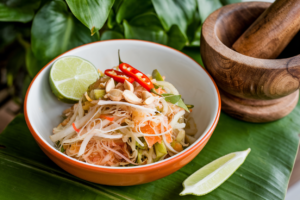
You know that one salad that makes you question every boring bowl of lettuce you’ve ever eaten? This is it. Som Tum is crunchy, sour-sweet, fiery, and loud in all the right ways—like a street vendor shouting your order while mashing magic in a mortar.
It’s fast, fresh, and absolutely unapologetic. If flavor had a gym membership, this would be leg day. And yes, you’ll want seconds.
Probably thirds.
Why This Recipe Works
Som Tum is built on contrast: crisp green papaya meets tangy lime, searing chilies, and the umami hug of fish sauce. The pounding (or tossing) fuses the dressing into the shredded papaya so every bite is seasoned, not just slicked. It’s a no-cook dish that relies on technique, not time, to deliver depth. The result?
A balanced explosion—sweet, sour, salty, spicy—like Thailand’s flavor philosophy packed into a salad bowl.
Ingredients
- 2 cups shredded green (unripe) papaya
- 1 small carrot, shredded (optional but adds color)
- 8–10 cherry tomatoes, halved
- 8–12 green beans, cut into 1-inch pieces
- 2–4 Thai bird’s eye chilies (adjust to heat tolerance)
- 2–3 cloves garlic
- 2–3 tablespoons fresh lime juice
- 1–1.5 tablespoons fish sauce (start small, adjust)
- 1–2 tablespoons palm sugar (or light brown sugar)
- 2–3 tablespoons roasted peanuts, roughly crushed
- 1–2 tablespoons dried shrimp (optional, classic)
- 1–2 tablespoons tamarind juice (optional, adds tangy depth)
- Fresh herbs like Thai basil or cilantro (optional garnish)
- Ice water for soaking papaya strands (crisping)
The Method – Instructions
- Prep the papaya. Peel the green papaya, halve it, scoop out seeds. Shred into thin strands using a julienne peeler or box grater. Soak in ice water for 10 minutes for extra crunch, then drain well.
- Make the flavor base. In a large mortar and pestle, pound garlic and chilies until bruised and fragrant, not puréed.
No mortar? Use a heavy bowl and muddler, or smash with the flat of a knife, then chop.
- Season the sauce. Add palm sugar, fish sauce, and lime juice to the mortar. Lightly pound and stir until the sugar dissolves.
Taste: it should be boldly tangy, salty, and sweet. Adjust to your vibe.
- Add the mix-ins. Toss in dried shrimp (if using), green beans, and cherry tomatoes. Pound gently to bruise—think “tap, don’t annihilate”—so they release juices into the dressing.
- Time for papaya. Add the drained papaya (and carrot, if using).
Pound and toss with a spoon in the other hand, lifting and turning to coat every strand. You’re integrating, not mashing.
- Crunch factor. Stir in most of the crushed peanuts, saving a little for topping. Add tamarind juice if you want extra tang and depth.
- Final taste check. Adjust with more lime for brightness, fish sauce for salt/umami, or sugar if it’s too sharp.
If it’s missing “wow,” it probably needs more lime or a pinch of sugar. FYI: spice blooms with time.
- Serve immediately. Plate it up with remaining peanuts on top. Great with sticky rice and grilled chicken, or eat it straight from the mortar like a savage (respectfully).
Keeping It Fresh
Som Tum shines right after mixing when the papaya is still snappy and the tomatoes haven’t watered down the dressing.
If you need to make ahead, keep components separate: shredded papaya in the fridge, dressing pre-mixed, and combine last minute. Leftovers? They’ll soften but are still tasty within 12–18 hours.
To revive, add a squeeze of lime, a pinch of sugar, and fresh peanuts for crunch.
Benefits of This Recipe
- No stove, no stress: Zero cooking. Perfect for hot days, busy nights, or when the oven’s already doing overtime.
- Nutrient-dense: Green papaya brings fiber and enzymes; tomatoes add lycopene; peanuts offer protein and healthy fats.
- Customizable heat: From gentle warmth to “call the fire department,” you control the chilies.
- Budget-friendly: Simple ingredients with big payoff. Street food vibes without plane ticket prices.
- Pairs with everything: Works as a salad, side, or light main.
Add shrimp, tofu, or grilled chicken to level it up.
Don’t Make These Errors
- Using ripe papaya: It’s too soft and sweet. You need firm, green, unripe papaya for the signature crunch.
- Skipping the bruise/muddle step: Just pouring dressing over won’t cut it. The pounding helps marry flavors into the papaya.
- Over-mashing: You’re not making baby food.
Gentle pounding, frequent tossing—texture is king.
- Under-seasoning: Som Tum should be bold. If it tastes timid, add more lime, fish sauce, or a pinch of sugar to balance.
- Stale peanuts: Old nuts taste sad. Roast briefly or buy fresh; the crunch completes the dish.
- Waterlogged papaya: Skip the soak or forget to drain and you’ll dilute the dressing.
Soak cold, then drain thoroughly.
Different Ways to Make This
- Som Tum Thai (classic): Sweet-sour-spicy with peanuts and dried shrimp (as above).
- Som Tum Lao (Isaan style): Funkier with fermented fish sauce (pla ra) and less sweetness. Hardcore fans only, IMO.
- Som Tum Poo: Includes salted black crab for briny punch—intense and traditional.
- Veg-forward: Swap fish sauce with soy sauce or vegan fish sauce; skip dried shrimp; add extra lime and a touch more sugar.
- Fruit remix: Try green mango or green apple instead of papaya for a tart, crisp twist.
- Protein add-ins: Top with grilled shrimp, seared tofu, or shredded roast chicken for a fuller meal.
- Herb-loaded: Fold in Thai basil, cilantro, and mint for a garden-bright finish.
FAQ
What can I use if I can’t find green papaya?
Green mango is the closest swap, with a sharper tang. Green apple or kohlrabi also work—crisp texture is the priority.
Adjust sugar and lime to keep the balance right.
Do I need a mortar and pestle?
No, but it helps. Use a sturdy bowl and a muddler or the end of a rolling pin to bruise garlic, chilies, and beans. The key is light pounding plus tossing, not blending.
How hot should it be?
Traditional Som Tum is fiery.
Start with one chili if you’re cautious, then scale up. Removing seeds reduces heat. Pro tip: you can add heat, but you can’t subtract it.
Can I make it vegan?
Yes.
Replace fish sauce with soy sauce, tamari, or a good vegan fish sauce. Skip dried shrimp. Add a splash of seaweed-infused water for umami if you’re feeling extra.
Why is my Som Tum watery?
Likely too much tomato juice or undrained papaya.
Use firmer tomatoes, drain papaya well, and pound gently. If needed, add a pinch more sugar and lime to re-balance.
How do I store leftovers?
Refrigerate in an airtight container for up to 18–24 hours. It will soften but remains flavorful.
Add fresh peanuts and a squeeze of lime before serving to perk it up.
Is palm sugar necessary?
Palm sugar gives a round, caramel note, but light brown sugar works. Start small; you want balanced sweetness, not dessert.
What do I serve with Som Tum?
Sticky rice, grilled chicken (gai yang), grilled pork, or even seared tofu. It also shines alongside jasmine rice and a fried egg because why not?
My Take
Som Tum is proof that salads don’t need croutons to be addictive—they need rhythm.
The pounding, tossing, tasting, adjusting—that’s the dance. I like mine medium-hot, heavy on lime, with just enough sugar to soften the edges, plus a ridiculous handful of fresh peanuts. It’s fast, flexible, and loud in flavor—exactly how I want a weeknight meal to behave.
Make it once and you’ll start craving that crispy, tangy, spicy chaos on repeat.
Printable Recipe Card
Want just the essential recipe details without scrolling through the article? Get our printable recipe card with just the ingredients and instructions.
Printable Recipe Card
Want just the essential recipe details without scrolling through the article? Get our printable recipe card with just the ingredients and instructions.