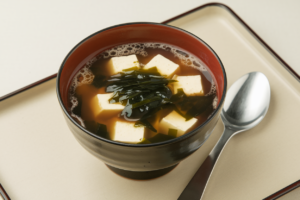
You know those meals that make you feel smarter, calmer, and weirdly more attractive? This is one of them. Miso Soup with Tofu and Seaweed is the definition of low-effort, high-impact—five ingredients, ten minutes, zero drama.
It’s clean, cozy, and quietly elite, like wearing a cashmere sweater to a grocery store. Make it on a weeknight, serve it to guests, or just sip it solo like a wellness guru. Bonus: it’s basically a hug in a bowl, without the awkward small talk.
The Secret Behind This Recipe
The magic is in two things: quality miso and a legit dashi base.
Dashi is the Japanese stock that gives you that unmistakable, umami depth—think kombu (kelp) and bonito flakes, or a vegetarian version using just kombu and dried shiitake. It’s the foundation, and skipping it is like building a house on vibes. Then there’s miso. White (shiro) miso is milder and slightly sweet; red (aka) miso is stronger and saltier.
Mix them 50/50 for balance, or pick your favorite and run with it. The rest is architecture: tender tofu, silky wakame seaweed, and just-wilted scallions. Simple?
Yes. Basic? Not even close.
Ingredients
- 4 cups dashi (classic: kombu + bonito; vegetarian: kombu + dried shiitake; or use instant dashi granules)
- 3–4 tablespoons miso paste (white, red, or a blend)
- 7 oz (200 g) soft or silken tofu, cut into 1/2-inch cubes
- 2 tablespoons dried wakame seaweed (or 1/2 cup rehydrated)
- 2 scallions (green onions), thinly sliced
- Optional boosts: a splash of soy sauce or tamari, 1 teaspoon sesame oil, pinch of chili flakes, or a few enoki mushrooms
- Water as needed to adjust seasoning and intensity
The Method – Instructions
- Make the dashi. For scratch stock: Soak a 4×4-inch piece of kombu and 2 dried shiitake in 4 cups cold water for 30 minutes, then gently heat until tiny bubbles form.
Remove kombu just before boiling; simmer 5 minutes, remove shiitake, and strain. Or whisk instant dashi granules into hot water per package.
- Rehydrate the wakame. Place dried wakame in a bowl with warm water for 5 minutes. Drain and roughly chop if pieces are large.
- Warm the tofu. Bring the dashi to a gentle simmer (not a rolling boil).
Add tofu cubes and heat 2–3 minutes until warmed through. Don’t stir aggressively unless tofu rubble is your thing.
- Temper the miso. Ladle 1/2 cup hot dashi into a small bowl. Whisk in the miso until smooth. Never boil miso—you’ll nuke the delicate flavor and probiotics.
- Finish the soup. Turn heat to low.
Stir the miso mixture back into the pot. Add wakame and most of the scallions. Taste and adjust with a splash of soy or a bit more miso if needed.
- Serve immediately. Ladle into bowls, top with remaining scallions, and add sesame oil or chili flakes if you’re feeling fancy.
Preservation Guide
- Fridge: Store the soup (without miso added) up to 3 days.
Reheat gently, then whisk in miso right before serving for best flavor. If miso is already in, it’s still fine—just heat on low and don’t boil.
- Freezer: Freeze the dashi + tofu + wakame, but add miso after reheating. Miso freezes okay but loses nuance; tofu texture may firm up slightly but remains tasty.
- Reheating: Low heat, no boiling.
Stir occasionally to prevent tofu breakage. Add fresh scallions at the end so they don’t go soggy and sad.
What’s Great About This
- Ridiculously fast: From craving to spoon-in-mouth in 10–15 minutes.
- Nutrient-dense: Protein from tofu, iodine and minerals from seaweed, probiotics from miso. Your gut will send a thank-you note.
- Versatile: Breakfast, lunch, dinner, or post-workout.
It’s the little black dress of soups.
- Budget-friendly: A handful of pantry staples turns into something you’d pay $8 for at a café. FYI, you just outsmarted brunch.
- Comfort without the crash: Light yet satisfying. No food coma, no regrets.
What Not to Do
- Don’t boil after adding miso. You’ll flatten the flavor and kill beneficial cultures.
Keep it below a simmer.
- Don’t skip dashi. Water alone = bland. Dashi gives the soup its soul.
- Don’t over-stir the tofu. Use a spoon gently. Treat it like a VIP, not a stress ball.
- Don’t overload with salt. Miso is salty.
Taste first, then add soy sauce only if needed.
- Don’t add wakame too early. It rehydrates fast. Add at the end to avoid slimy overcooked seaweed.
Recipe Variations
- Mixed Miso Blend: Use 2 tablespoons white miso + 1 tablespoon red miso for balance and depth.
- Vegetable Boost: Add thin-sliced carrots, daikon, or baby spinach in the simmer stage. Keep pieces small so the soup stays quick.
- Spicy Lounge: Stir in a dab of chili crisp or a pinch of shichimi togarashi.
Big flavor, minimal effort.
- Mushroom Umami: Add enoki or shiitake slices with the tofu. Extra savoriness without overpowering the broth.
- Ginger Glow: Grate 1 teaspoon fresh ginger into the dashi for a warm, comforting nuance. Great when under the weather (or pretending to be).
- Protein Switch: Swap tofu for poached shrimp or add a beaten egg in a thin stream for silky ribbons.
Not traditional, but delicious, IMO.
- No-Wakame Version: Use baby bok choy or kale slivers if seaweed isn’t your vibe today.
FAQ
Which miso should I buy for this?
White (shiro) miso for mild and slightly sweet, red (aka) miso for deeper and saltier. For beginners, start with white or a 50/50 blend—it’s forgiving and balanced.
Can I make it completely vegetarian or vegan?
Yes. Use kombu and dried shiitake to make dashi, and skip bonito flakes.
Everything else is plant-based by default.
Is instant dashi okay?
Totally. Instant dashi is a weeknight hero. Choose a brand you like and adjust the amount to taste—some are saltier than others.
Can I use firm tofu instead of soft?
Yes, but you’ll lose some silky texture.
Firm tofu holds up better if you plan to meal prep or reheat multiple times.
Why did my soup taste flat?
Likely culprits: no real dashi, boiling the miso, or not using enough miso. Also check your wakame—old seaweed can taste dull. A splash of soy or a pinch of salt can rescue it.
How do I avoid cloudy clumps of miso?
Temper it in a small bowl with hot dashi, whisk smooth, and stir back in off the boil.
You can also use a small mesh strainer and dissolve it directly over the pot.
Can I add noodles?
Yes—udon or soba work well. Cook separately, then ladle the soup over so the noodles don’t drink all your broth like they pay rent.
The Bottom Line
Miso Soup with Tofu and Seaweed is the ultimate minimalist flex: a handful of ingredients delivering depth, comfort, and nutrition in minutes. Respect the dashi, don’t boil the miso, and keep the tofu gentle—that’s the whole playbook.
Make it once, and it’ll slide into your weekly rotation like it was always meant to be there. Simple, soulful, and quietly addictive.
Printable Recipe Card
Want just the essential recipe details without scrolling through the article? Get our printable recipe card with just the ingredients and instructions.
Printable Recipe Card
Want just the essential recipe details without scrolling through the article? Get our printable recipe card with just the ingredients and instructions.