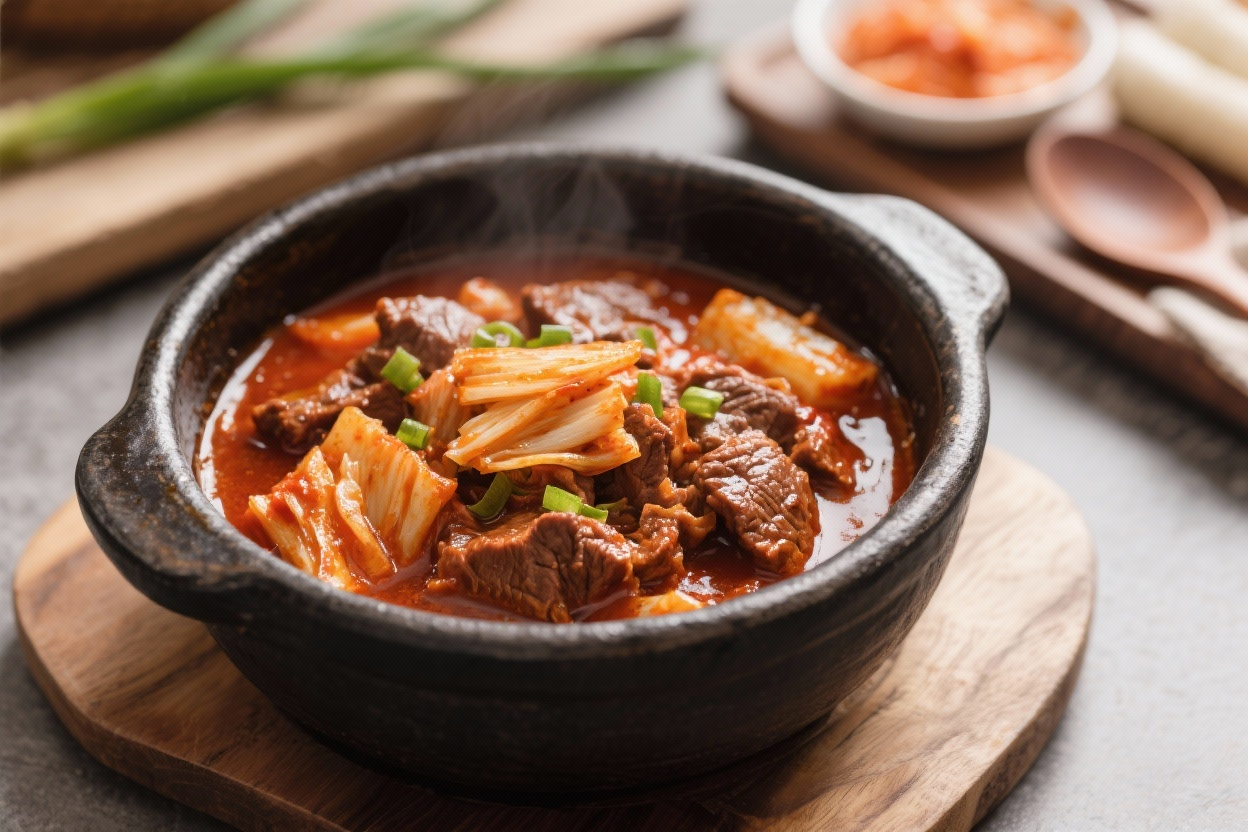
You want weeknight comfort that doesn’t taste like a compromise? This Korean Gochujang Beef Stew is a slow-simmered flavor bomb that makes basic beef stew look like it forgot its passport. It’s spicy-sweet-savory with melt-in-your-mouth beef, silky potatoes, and a broth that clings to your spoon like it owes you money.
You’ll spend 20 minutes prepping, let it do its thing, and suddenly your kitchen smells like you know secrets. Serve it over rice and watch people go quiet while eating—always a good sign.
Why This Recipe Works

Gochujang = built-in complexity. This Korean fermented chili paste brings heat, sweetness, umami, and a deep roasted backbone—no need to juggle 10 spices.
Two-stage browning. Browning the beef first builds a fond (those caramelized bits) that become the stew’s flavor engine. Deglazing pulls every last drop of savory into the pot.
Layered aromatics. Garlic, ginger, and scallions with soy sauce and sesame oil create a base that tastes like a professional kitchen did the prep.
Starch control. Potatoes and carrots release just enough starch to thicken the stew without turning it into baby food.
The result? Glossy, spoon-coating broth.
What You’ll Need (Ingredients)
- 2 pounds (900 g) beef chuck, cut into 1.5-inch cubes
- 1 large onion, sliced
- 4 cloves garlic, minced
- 1 tablespoon fresh ginger, minced
- 3 tablespoons gochujang (Korean chili paste)
- 1 tablespoon gochugaru (Korean chili flakes), optional for extra heat
- 2 tablespoons soy sauce
- 1 tablespoon fish sauce (optional but recommended)
- 1 tablespoon brown sugar or honey
- 1 tablespoon toasted sesame oil
- 4 cups beef broth (or water + 1 bouillon)
- 2 medium potatoes, peeled and cut into chunks
- 2 large carrots, cut into thick rounds
- 1 cup daikon radish, cubed (optional but traditional-ish)
- 1 tablespoon neutral oil (canola/avocado)
- 2 scallions, sliced (for garnish)
- 1 teaspoon rice vinegar or apple cider vinegar (to finish)
- Sesame seeds, for garnish
- Steamed rice, for serving
How to Make It – Instructions

- Pat and season the beef. Blot beef cubes dry with paper towels. Season with salt and pepper.
Dry beef browns; wet beef steams—don’t skip this.
- Brown in batches. Heat neutral oil in a heavy pot over medium-high. Sear beef on two sides until deeply browned, about 3–4 minutes per side. Work in batches to avoid crowding.
Transfer browned beef to a plate.
- Build the base. Reduce heat to medium. Add onion; cook 3–4 minutes until soft and golden. Stir in garlic and ginger for 30 seconds until fragrant.
Don’t burn the garlic—it turns petty fast.
- Stir in flavor paste. Add gochujang, soy sauce, fish sauce, brown sugar, and sesame oil. Cook 1–2 minutes, stirring, to caramelize the paste and wake up the flavors.
- Deglaze. Pour in 1/2 cup broth and scrape up the browned bits from the bottom. That’s pure flavor—collect it like rent.
- Simmer low and slow. Return beef and any juices to the pot.
Add remaining broth. Bring to a gentle simmer, cover, and cook on low for 60 minutes, stirring occasionally.
- Add vegetables. Stir in potatoes, carrots, and daikon (if using). If you like it spicier, add gochugaru now.
Simmer uncovered for 25–35 minutes until beef is tender and vegetables are soft but intact.
- Adjust and brighten. Taste. Add salt if needed, a splash of rice vinegar for brightness, and more soy for depth if the stew tastes flat. If too thick, add a bit of water; too thin, simmer 5–10 minutes more.
- Garnish and serve. Ladle into bowls.
Top with scallions and sesame seeds. Serve with steamed rice or crusty bread (I won’t tell).
Storage Instructions
- Fridge: Store in airtight containers for up to 4 days. It tastes even better on day two—stew glow-up.
- Freezer: Freeze for up to 3 months.
Cool completely, portion into freezer-safe containers, and label like an adult.
- Reheat: Warm on the stovetop over medium with a splash of water or broth. Microwaves work, but stir halfway to avoid cold pockets.

Benefits of This Recipe
- Maximum flavor, minimal complexity. Gochujang compresses spice cabinet chaos into one spoonful.
- Meal prep gold. Scales easily and reheats like a champ—great for busy weeks.
- Balanced nutrition. Protein, complex carbs, and veggies in one bowl. Add extra greens for bonus points.
- Comfort without boredom. Familiar stew vibes with a Korean twist that keeps you coming back for “just one more bite.”
Pitfalls to Watch Out For
- Skipping the browning step. No sear = no depth.
That’s non-negotiable.
- Boiling too hard. A rolling boil makes beef tough. Gentle simmer is the move.
- Adding veggies too early. They’ll disintegrate before the beef turns tender. Timing matters.
- Underseasoning. Gochujang is salty-sweet, but broth volume varies.
Taste and adjust at the end.
- Wrong cut of beef. Lean cuts dry out. Choose chuck, brisket, or short rib for meltiness.
Different Ways to Make This
- Slow Cooker: Brown beef and aromatics on the stove, then transfer to a slow cooker with the liquids and veggies. Cook on low 7–8 hours or high 4–5.
- Pressure Cooker/Instant Pot: Sauté beef and aromatics.
Add liquids. Pressure cook 35 minutes; quick release, add veggies, then pressure cook 5–7 minutes more.
- Spicy Bulgogi Vibes: Swap half the beef broth for pear juice or grated Asian pear for fruity sweetness. IMHO it slaps.
- Mushroom Boost: Add shiitakes for umami depth.
A splash of mushroom powder? Chef’s kiss.
- Lighter Version: Use chicken thighs and chicken broth. Reduce simmer time by 20–25%.
- Veg-Friendly: Sub firm tofu and mushrooms; use veggie broth.
Add tofu in the last 10 minutes to avoid breakage.
FAQ
How spicy is this stew?
Moderately spicy by default—warm, not punishing. Reduce or omit gochugaru and use 2 tablespoons gochujang instead of 3 for a milder version. Add more at the end if you want to level up.
Can I use a different cut of beef?
Yes.
Chuck is ideal, but boneless short ribs or brisket work great. Avoid lean cuts like sirloin—they dry out and sulk.
What if I can’t find gochujang?
It’s widely available online and in most supermarkets now. In a pinch, mix miso paste with sriracha and a bit of honey.
Not identical, but close enough to scratch the itch.
Do I have to use fish sauce?
No, but it adds a subtle savory depth without fishy flavor. If skipping, add an extra teaspoon of soy sauce and a pinch of anchovy powder or Worcestershire.
How do I thicken the stew more?
Simmer uncovered for 10–15 minutes to reduce. Or mash a few potato chunks right in the pot.
Avoid flour or cornstarch unless you want a glossy gravy vibe.
Can I make this ahead?
Absolutely. Stew improves overnight as flavors marry. Reheat gently and finish with a splash of vinegar and fresh scallions to revive brightness.
What should I serve with it?
Steamed short-grain rice, kimchi, and quick cucumber pickles are perfect.
Noodles or crusty bread also make excellent sidekicks—choose your carb adventure.
My Take
This Korean Gochujang Beef Stew is the move when you want comfort with a pulse. It’s familiar enough for picky eaters but interesting enough that your foodie friend will ask for seconds. The broth is rich without being heavy, the heat is friendly, and the whole thing feels like a hug with good posture.
FYI: make extra—you’ll “accidentally” eat it for breakfast tomorrow.
Printable Recipe Card
Want just the essential recipe details without scrolling through the article? Get our printable recipe card with just the ingredients and instructions.
Printable Recipe Card
Want just the essential recipe details without scrolling through the article? Get our printable recipe card with just the ingredients and instructions.