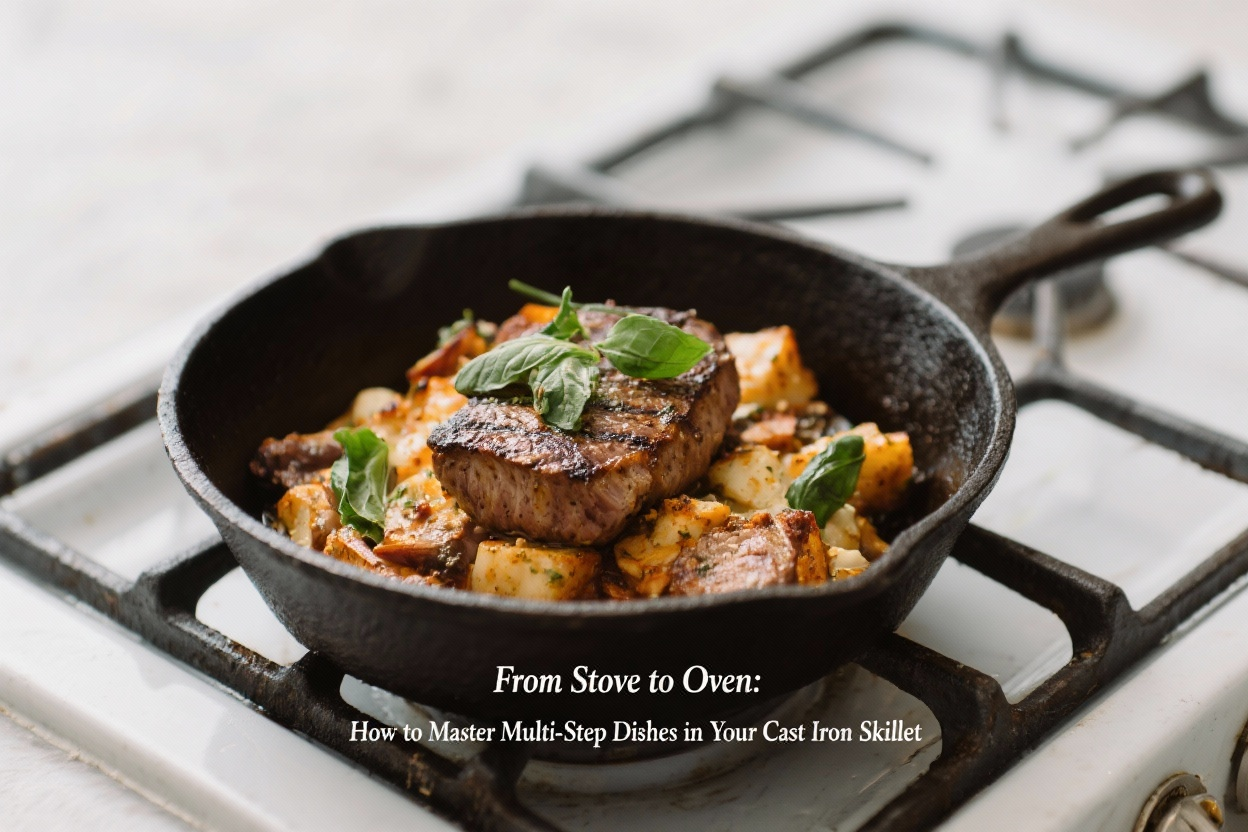
You bought a cast iron skillet for steak and then let it retire after two uses—relatable. But if you’re only searing, you’re leaving 80% of its superpowers on the table. The real magic happens when you start on the stove and finish in the oven—hello golden crusts, juicy centers, and one-pan cleanup.
Think restaurant-level results in weeknight time. You bring the heat; the skillet brings the credibility.
What Makes This Recipe So Good

This method is all about the theater: quick sear, oven finish, and a pan sauce that makes you look suspiciously professional. The cast iron retains heat like a champ, so you get consistent browning and predictable cooking times.
Plus, you’re building layers of flavor in the same pan—fond, butter, aromatics, boom. It’s efficient, forgiving, and honestly, fun. What are we making? A skillet chicken with garlicky mushrooms, thyme, and a sherry cream pan sauce—classic, adaptable, and wildly comforting. It’s the template you’ll reuse for pork chops, salmon, or hearty veggies.
Ingredients Breakdown
- 4 bone-in, skin-on chicken thighs (about 2 lbs): Skin = crispy, bone = flavor.
Boneless works, but reduce oven time.
- Kosher salt and freshly ground black pepper: Be generous—this is your base layer.
- 1 tablespoon neutral oil (avocado, canola, or grapeseed): High smoke point for searing.
- 2 tablespoons unsalted butter: For basting and sauce richness.
- 8 ounces cremini or button mushrooms, sliced: Meaty texture and umami.
- 4 garlic cloves, smashed: Big aroma, quick cook.
- 1 small shallot, minced: Sweet, subtle bite.
- 1 teaspoon fresh thyme leaves (or 1/2 teaspoon dried): Earthy backbone.
- 1/3 cup dry sherry or white wine: Deglazes and brightens.
- 1/2 cup low-sodium chicken stock: Body and depth.
- 1/3 cup heavy cream: Silky finish. Sub half-and-half for lighter sauce.
- 1 teaspoon Dijon mustard: Quiet tang that ties it together.
- Lemon wedge, optional: A final squeeze brings the sauce to life.
- Chopped parsley, for garnish: Freshness and color.
Step-by-Step Instructions

- Preheat your oven to 400°F (205°C). Move an oven rack to the middle. You want hot-and-ready so the transfer is seamless.
- Pat the chicken very dry. Moisture is the enemy of crisp.
Season generously with salt and pepper on both sides.
- Heat the skillet over medium-high until just smoking. Add oil, then lay chicken thighs skin-side down. Don’t crowd. If your skillet is small, sear in batches.
- Sear undisturbed for 6–8 minutes. You want deep golden-brown, not blond.
If it sticks, it’s not ready—give it another minute.
- Flip the chicken. Add 1 tablespoon butter and baste for 30 seconds. That sizzling? Flavor confetti.
- Transfer the skillet to the oven. Roast 12–15 minutes until thighs reach 170–175°F.
Skin should be audibly crisp. Remove chicken to a plate to rest.
- Return the skillet to medium heat. Spoon off excess fat if needed, but leave 1–2 tablespoons plus the fond. Add mushrooms.
Cook 4–5 minutes until browned.
- Add shallot, garlic, and thyme. Sauté 1–2 minutes until fragrant. Don’t burn the garlic—bitter is not the vibe.
- Deglaze with sherry or wine. Scrape up brown bits. Reduce by half, about 1–2 minutes.
- Pour in chicken stock. Simmer 2 minutes to concentrate.
Stir in remaining 1 tablespoon butter for extra gloss, IMO totally worth it.
- Add cream and Dijon. Simmer gently until the sauce coats a spoon, 2–3 minutes. Taste and adjust salt and pepper. A tiny squeeze of lemon if it needs a pop.
- Nestle chicken back into the skillet. Spoon sauce over the thighs and rest 2 minutes so everything gets friendly.
Garnish with parsley and serve.
Storage Instructions
- Fridge: Store in an airtight container for up to 4 days. Keep sauce and chicken together to prevent drying.
- Freezer: Freeze chicken with sauce for up to 2 months. Thaw overnight in the fridge.
- Reheat: Warm gently in a covered skillet over low heat with a splash of stock or water, 5–8 minutes.
Avoid microwaving on high—rubber chicken is a crime.

Benefits of This Recipe
- One-pan efficiency: Less cleanup, more flavor stacking.
- Restaurant-level texture: Sear + roast = crisp skin, juicy meat. Science, but delicious.
- Flexible template: Swap proteins, vegetables, and herbs without chaos.
- Cast iron mastery: You’ll learn heat control, fond management, and pan sauce basics—skills you’ll use forever.
Don’t Make These Errors
- Starting with a cold pan: You’ll steam, not sear. Preheat until it shimmers.
- Moving the chicken too soon: If it sticks, it’s not browned.
Patience pays—like compound interest, but tastier.
- Skipping the rest: Meat needs a minute to relax. Cutting early dumps juices onto your cutting board (sad).
- Boiling the cream hard: Gentle simmer only. Otherwise, it can split and look tragic.
- Using too much wine: Reduce it.
Raw alcohol flavor ruins the vibe fast.
- Neglecting seasoning: Taste at every stage. Salt is a volume knob; use it wisely.
Mix It Up
- Protein swaps: Pork chops (1-inch, bone-in), sear 3–4 minutes per side; finish to 140°F. Salmon fillets, sear 2–3 minutes skin-side down, finish to 125°F.
- Vegetarian route: Use thick-cut cauliflower steaks or portobellos.
Sear until browned, finish in oven, then make the same sauce with veggie stock.
- Herb variations: Rosemary + lemon zest for a piney punch. Tarragon + white wine for French bistro energy.
- Spice it: Smoked paprika and a pinch of chili flakes. Or go cumin-coriander for warmth.
- Dairy-free: Use olive oil and full-fat coconut milk; season with extra lemon to balance.
- Grain partners: Serve over orzo, mashed potatoes, or crusty bread to mop up the sauce (the true goal, honestly).
FAQ
Do I need to preheat my cast iron skillet?
Yes.
Preheating ensures proper sear and minimizes sticking. The surface should be hot enough that oil shimmers and a droplet of water skitters before you add the chicken.
Can I use boneless, skinless chicken thighs?
Absolutely. Sear 3–4 minutes per side, then finish in the oven 6–8 minutes to about 170°F.
You’ll miss the crispy skin, but the sauce still slaps.
What if I don’t have sherry or wine?
Use extra stock plus 1 teaspoon apple cider vinegar or lemon juice to mimic brightness. Reduce a bit longer to concentrate flavor.
How do I prevent the cream sauce from breaking?
Keep heat moderate, add cream after deglazing and reducing stock, and avoid boiling. If it starts to split, whisk in a splash of cold cream or a knob of butter off heat.
Is my skillet oven-safe?
Most cast iron is oven-safe up to very high temps.
If yours has a silicone handle, it’s fine at 400°F. Wooden handles? Hard pass.
Can I scale this for a crowd?
Yes—use two skillets or work in batches.
Keep seared chicken on a sheet pan; once all pieces are seared, roast together, then make the sauce in one skillet and combine.
What sides pair best with this dish?
Roasted potatoes, buttered noodles, polenta, or a simple arugula salad. Something to catch the sauce is non-negotiable, FYI.
In Conclusion
Your cast iron isn’t just a steak station—it’s a multi-step machine built for sear-to-oven glory. This method gives you crisp skin, juicy centers, and a sauce that tastes like you borrowed a French chef.
Learn the flow—hot pan, patient sear, oven finish, pan sauce—and you can riff on almost any protein or veg. One skillet, big flavor, zero culinary fear. Now go make that sizzle earn its keep.
Printable Recipe Card
Want just the essential recipe details without scrolling through the article? Get our printable recipe card with just the ingredients and instructions.
Printable Recipe Card
Want just the essential recipe details without scrolling through the article? Get our printable recipe card with just the ingredients and instructions.