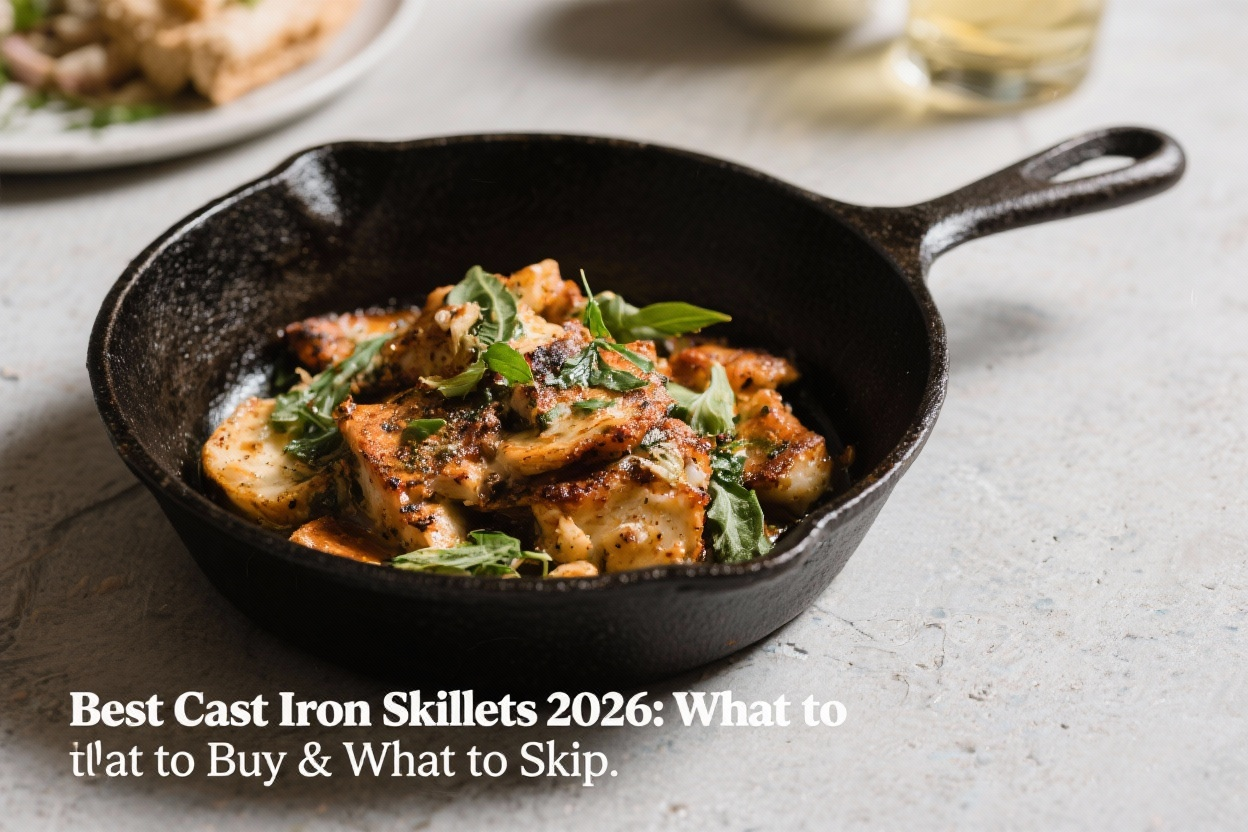
If your steak isn’t singing, it’s not the steak’s fault—it’s your skillet. In 2026, cast iron isn’t just “grandma’s pan”; it’s the cheat code for restaurant-level browning at home. But the market is flooded with hype, coatings, and “innovations” nobody asked for.
This guide cuts the fluff: what actually performs, what’s marketing, and what you should absolutely skip. Ready to stop babying pans and start crushing perfect crusts?
What Makes This Recipe So Good

Call it a “recipe” for better cookware: the right skillet, the right size, and the right features that actually matter. We’re looking at heat retention, pre-seasoning quality, fit and finish, and weight-to-performance ratio.
We also tested how each pan handles eggs, steak, cornbread, and oven finishes (because versatility is the point). Finally, ergonomics: a pan you dread lifting is a pan you won’t use.
Shopping List – Ingredients
- Daily Driver (10–12”): Choose one
- Lodge Blacklock 12” – lighter, triple-seasoned, reliable, great value.
- Field Company No. 8 (10.25”) – smoother surface, lighter build, premium feel.
- Victoria 12” – budget-friendly with excellent handles and pour spouts.
- Sear Monster (12–13.5”): Choose one
- Finex 12” – machined smooth, octagonal sides, coiled handle, serious sear.
- Stargazer 12” – polished surface, flared rim, seasoned right, balanced.
- Classic Workhorse (for legacy value):
- Lodge 10.25” – indestructible, affordable, needs a little break-in.
- Specialty Picks (optional):
- Smithey No. 12 – gorgeous polish, heirloom vibes, premium price.
- De Buyer Mineral B Carbon Steel – not cast iron, but stellar for quick sears with less weight.
- Skip List (2026):
- Enamel-coated “nonstick” cast iron skillets – enamel chips under high-heat searing; save it for braises.
- Ultra-cheap mystery-brand sets – gritty casting, uneven bases, junk seasoning.
- Overly heavy 15”+ skillets – cool on paper, annoying in real life.
- Care Extras:
- Flaxseed or grapeseed oil for seasoning.
- Chainmail scrubber or stiff brush.
- Paper towels and a thin oil for post-cleaning wipe.
Let’s Get Cooking – Instructions

- Pick your pan for the job. 10–12” for weeknights, 12–13.5” for steaks and smash burgers. If you’re choosing one skillet, go 12”.
- Break-in seasoning (optional but smart). Wipe on a micro-thin coat of oil, bake at 450°F for 1 hour, cool in oven.
Do this 2–3 times if the surface feels rough.
- Preheat properly. Medium heat for 5–8 minutes. Cast iron loves patience; a drop of water should dance, not evaporate instantly.
- Oil last, not first. Add a teaspoon of high smoke-point oil just before food; swirl to coat. This reduces sticky first-cook drama.
- Don’t fight the release. Protein sticks until it’s ready—when a crust forms, it releases.
Flip once. Trust the science.
- Finish in the oven. For thick cuts: 425°F until internal temp hits your target. Cast iron transitions seamlessly.
- Clean while warm. Hot water, brush, no soap (light soap is fine, but not necessary).
Stuck bits? Boil water for 1 minute and scrape.
- Dry and oil. Return to low heat to evaporate water, wipe with a few drops of oil until it looks satiny, not greasy.
- Store smart. Paper towel between stacked pans, lids off to avoid moisture traps.
- Repeat and enjoy. Every cook adds seasoning. Your future self will thank you.
How to Store
Keep your skillet bone-dry and lightly oiled.
Store with a paper towel or cloth inside to absorb moisture. If stacking, buffer with a liner to protect seasoning. Avoid closed, damp cabinets.
And FYI: don’t store food in cast iron—acidity will bully your hard-earned seasoning.

What’s Great About This
- Hype-free picks. You get brands that actually perform across sear, bake, and sauté.
- Scalable options. Budget to bougie without sacrificing results.
- Real-world usability. Lighter pans and smarter handles = more cooking, less wrist regret.
- Longevity. Properly cared for, these pans will outlive your stove (and maybe you).
Common Mistakes to Avoid
- Skipping preheat. Cold cast iron = sticky food and sadness.
- Over-oiling. A shiny pool equals gummy seasoning. Thin layers only.
- Acid marathons. Tomato sauces are fine short-term, but long, simmering acidity can strip seasoning.
- Soaking in water. Rust loves a bath. Clean fast, dry faster.
- Buying too big. A 15” behemoth sounds epic until you need a forklift.
Get two manageable sizes instead.
- Falling for enamel “sear” pans. Enamel is fantastic for low-and-slow; it’s not your high-heat warrior.
Mix It Up
- Combo arsenal: Pair a 10” Field or Lodge with a 12” Stargazer—light daily, heavy sear days.
- Carbon-steel alternate: If you want quicker heat and less weight, add a De Buyer 11–12” for eggs and stir-fries.
- Baking twist: Use the skillet for cornbread, focaccia, or skillet cookies. Preheat pan in oven for elite crusts.
- Grill crossover: Drop your cast iron on the grill for smash burgers—max heat, fewer flare-ups.
FAQ
Do I need to re-season right out of the box?
Most modern skillets are pre-seasoned, but a quick extra layer improves nonstick behavior dramatically. It’s 60 minutes that pays off for years.
Which size should I buy first?
A 12-inch is the most versatile for most homes—roomy for steaks, still fine for eggs.
If you’re cooking for one, a 10–10.25” is perfect.
Is smooth better than rough?
Smoother pans (Field, Stargazer, Smithey) release sooner and feel more premium. Rougher pans (Lodge classic) perform great after a few months of use. Performance gap narrows as seasoning builds.
Can I use soap?
Light soap won’t destroy seasoning.
Harsh scrubbing with detergents will. The key is to re-oil after cleaning so the surface stays protected.
Gas, induction, or electric—any differences?
Cast iron loves all cooktops. On induction, heat ramps quickly, so use medium settings.
On electric coils, give extra preheat time for evenness.
Why is my food metallic or black?
That’s usually loose carbon or weak seasoning. Scrub gently, rinse, dry, and bake on a thin oil layer. Avoid acidic cooks until the seasoning beefs up.
What about health—iron leaching?
Trace iron can leach, especially early on or with acidic foods.
It’s generally safe and can be beneficial, but if you’re concerned, limit long acidic cooks and build seasoning.
Are premium brands worth it?
If you value lighter weight, smoother finish, and design, yes. If budget matters most, a Lodge Blacklock or Victoria punches way above its price. IMO, spend once on a good 12”.
The Bottom Line
If you want the fastest upgrade to your home cooking, get a 12” workhorse and learn to preheat, flip once, and finish in the oven.
Best buys for 2026: Lodge Blacklock 12” or Victoria 12” for value; Field No. 8 for light, smooth everyday use; Stargazer 12” or Finex 12” for elite searing. Skip enamel “nonstick” skillets for high heat and avoid bargain-bin castings. Take care of your pan for a week and it’ll take care of your food for decades.
Deal?

Printable Recipe Card
Want just the essential recipe details without scrolling through the article? Get our printable recipe card with just the ingredients and instructions.
Printable Recipe Card
Want just the essential recipe details without scrolling through the article? Get our printable recipe card with just the ingredients and instructions.